
Fundraising through the issuance of shares to qualified institutional investors has seen hectic activity in the first half of the current fiscal year (FY24), with 20 companies mobilising over Rs 18,400 crore, more than four-fold from the year-ago period, on positive investors' sentiments. Moreover, the robust trend of Qualified Institutional Placements (QIPs) in the first half of the fiscal year 2023-24 is expected to persist throughout the second half of the year too, Sanjay Moorjani, Research Analyst at SAMCO Securities, told PTI. Prashant Rao, director and head of equity capital markets, Anand Rathi Investment Banking, said that market and investor sentiments play an important role for these issuances.

Primary market tracking firm Prime Database has said it is the best time for the government to divest its stake in PSUs and it should target at least 60 public offers in five years.

The bench allowed the rejoinder affidavit to be filed by petitioners in two weeks thereafter and posted the matter for final hearing in January, 2025.

The plan of UID/Aadhaar-based surveillance does not end with the collection of fingerprints and iris scan, it goes quite beyond it and poses a lethal threat to the idea of India, says Gopal Krishna.

The number of draft red herring prospectuses (DRHPs) filed with the markets regulator - Securities and Exchange Board of India (Sebi) - jumped nearly fivefold to 145 in 2021-22 (FY22), compared with just 30 in the preceding financial year (2020-21, or FY21). This was on account of companies rushing to take advantage of a favourable market sentiment towards initial public offerings (IPOs), triggered by an influx of new investors, surge in the secondary market, and encouraging performance of newly listed stocks. In fact, DRHPs filed in FY22 was 4x the previous 10-year average and the highest since 2007-08, according to primary market tracker PRIME Database.

The Bombay high court on Monday said when streets and footpaths are cleared for the prime minister and other VVIPs for one day, why can't it be done on a daily basis for everyone else too.

Domestic mutual funds (MFs) have underpinned demand for most public floats this year, dominated by small- and mid-sized initial public offerings (IPOs). Of the 24 IPOs that have hit the market so far this financial year (2023-24, or FY24), MFs have played the role of 'anchor investors' in 20. They have subscribed to over 40 per cent, or Rs 2,850 crore, worth of shares of the Rs 6,900 crore on offer in the anchor category, according to data provided by PRIME Database, a firm that tracks primary market data.

In the current calendar year, small and medium enterprises (SMEs) have witnessed an impressive surge in initial public offerings (IPOs), surpassing the 2018 record. Over 150 SME IPOs have been introduced to the market, breaking the previous record of 141 set in 2018. According to data from PRIME Database, a primary market tracking firm, 147 companies successfully concluded their debut share sales by the end of October, raising a cumulative Rs 3,727 crore.
More than half a dozen companies will hit the market with their initial public offerings (IPOs) between now and the end of next week. The cumulative amount raised from these IPOs is expected to be around Rs 8,000 crore. Stationery products firm DOMS Industries and home financier India Shelter Finance's IPOs - of Rs 1,200 crore each - got off to a flying start on Wednesday (December 13), with the former garnering over six times the subscription and the latter getting 1.5 times subscribed.
Zaggle Prepaid, Cyient DLM, Healthvista India, Rashi Peripherals and Vishwaraj Sugar Industries have obtained the green signal to launch their initial public offerings (IPOs). The approvals come at a time when capital raising by way of IPOs has slowed to a crawl, with only four issues hitting the market so far this calendar year. Recently, the Securities and Exchange Board of India (Sebi) issued final observation letters on their draft red herring prospectuses (DRHPs), which is akin to getting approval to hit the markets.

The fees charged by investment banks to manage initial public offerings (IPOs) have increased to an average 3.23 per cent of the issue size this calendar year, the highest since 2020. The average fee is up 8 per cent compared to last year, when it stood at 2.99 per cent. The investment banking fees have increased as the average IPO size has shrunk this year.

The number of issues were the lowest since FY15, compared to 45 in FY18.
As many as 31 mainboard IPOs raised a cumulative Rs 26,272 crore in this period, according to Prime Database. During the April-September 2007 bull run, 48 IPOs totalling Rs 21,243 crore were launched. The number of deals in H1FY24 was 2.2 times that of the same period of the last fiscal year, but the amount raised was 26 per cent lower.

Foreign portfolio investors (FPIs) are likely to get a reprieve from the Securities and Exchange Board of India (Sebi) in case of a passive or unintended breach of the thresholds that trigger additional disclosure norms. According to sources, FPIs whose single group exposure exceeds 50 per cent of their corpus will get 10 trading days to bring down their exposure below the prescribed level, without triggering the stricter disclosure norms. If total equity exposure of an overseas fund exceeds Rs 25,000 crore and it doesn't wish to provide additional disclosures, it will have three months to pare its exposure.

A total of 180 NSE-listed companies have not appointed a woman director.

The most sought-after IPOs of 2017-2018 reap handsome gains for investors, but will IPOs this year do well after listing?
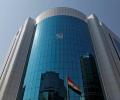
Sebi has restructured its advisory committee on market data that recommends policy measures pertaining to areas like securities market data access and privacy. Rejigging its market data advisory committee, Sebi has said the panel will now have 21 members, as per the latest information with the regulator. Earlier the committee had 20 members. The committee is chaired by M S Sahoo, Professor at National Law University, Delhi and former chairperson, Insolvency and Bankruptcy Board of India (IBBI).
It's raining IPOs, with eight issues hitting the market in a span of six days. However, the pace of new filings points to a deluge during the latter part of the year. So far this year, 58 companies have filed their draft red herring prospectus (DRHP) with the market regulator for initial public offerings (IPOs), exceeding the combined tally of 50 in the last two years. Industry participants said the filing count could cross 100 this year, setting a new benchmark in terms of amount mobilised in a calendar year.

As many as 56 firms collectively mopped up Rs 17,283 crores through IPOs during the April-September period of 2016-17.

Companies, which missed out on listing earlier, are giving it another shot but with significantly-reduced issue sizes. In the recent past, companies such as TVS Supply Chain Solutions, Suraj Estate Developers, and ESAF Small Finance Bank have re-filed their draft red herring prospectuses (DRHPs) with the Securities and Exchange Board of India (Sebi). This came after they slashed their issue sizes by 20-60 per cent.


The QIP route was a big hit.

Don't count too much on the anchor investor quota, as it will provide stability to the stock for only a short period

Industry players estimate the average payouts to be in the range of 50-75 per cent of the bankers' annual salaries. For the top performers, the bonuses could be 100-125 per cent.

Of the 59 IPOs for which the data is available, 36 IPOs received mega responses of more than 10x (of which, six IPOs more than 100x), while eight IPOs were oversubscribed more than 3x.
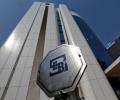
The Securities and Exchange Board of India's (Sebi's) proposal to re-introduce "hard underwriting" is seen as step to boost India's moribund initial public offering (IPO) markets. The regulator has proposed that in case an IPO fails to garner full subscription, the investment banker or a third-party can buy the unsubscribed shares. This practice was common during fixed-price issues prior to 1999. However, under the new book building regime, underwriting is allowed only to the extent of shortfall due to technical rejection of bids - this is referred to as "soft underwriting" and is rarely invoked.
The primary issue market has hit an all-time high with 63 corporates raising Rs 1,18,704 crore through main-board initial public offerings (IPOs) so far in 2021, which is nearly 4.5 times more than the Rs 26,613 crore raised through 15 issues in 2020 and almost double of the previous best of Rs 68,827 crore in 2017, according to a report. Pranav Haldea, managing director of Prime Database Group, said the IPO frenzy was driven by new-age loss-making technology start-ups along with strong retail participation, and the resultant massive listing gains were the key highlights of the year. Another highlight was only 51 per cent or Rs 103,621 crore of the total Rs 202,009 crore was fresh capital raising and the remaining Rs 98,388 crore were offers for sale.
The success of recent IPOs and the stability in the secondary market are propelling many firms and investment bankers to remove their IPO plans.

The Tata Tech IPO will be the first from the Tata group since TCS listed its shares in 2004.

LIC's $2.7-billion initial public offering (IPO) shall be the fifth-biggest globally in CY22. South Korean EV battery maker LG Energy Solution holds the record for the year's largest IPO at $10.8 billion, while Chinese mobile communications provider China Mobile IPO, which raised $8.6 billion, comes second. Dubai Electricity and Water Authority's (DEWA's) $6.1-billion IPO in March is currently the third biggest public offering for the year, followed by China National Offshore Oil Corporation's (CNOOC's) IPO; the firm had raised $5.1 billion by issuing shares in Mainland China after delisting from the American bourses.
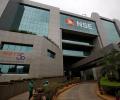
FPIs' ownership in NSE-listed companies reached a five-year high of 22.74 per cent in December 2020 on the back of huge net inflow of Rs 1.42 lakh crore by such investors in the third quarter.

Market experts said disruptions caused by the pandemic - to businesses as well as the filing process - and the sharp decline in valuations were the reasons behind fewer new companies wanting to tap the capital markets.

India has been rejecting China renaming places in Arunachal Pradesh, asserting that the state is an integral part of the country and assigning "invented" names does not alter this reality.

According to PRIME Database, there are nine companies with active buyback programmes of Rs 8,605 crore. Among these, Infosys's share repurchase programme is the biggest at Rs 8,260 crore.

Helped by the Offer for Sale route, a whopping Rs 45,300 core was mobilised through public equity markets in 2013, a growth of 25 per cent over last year.

The mega real estate loan scam could delay the initial public offers of over half a dozen real estate developers because of poor investor sentiment, said bankers and analysts tracking the sector.

Managing the senior generals has proven to be quite a headache for General Asim Munir, even as he and his team of loyal henchmen labour hard to dispel the sense of unhappiness among the public about the army's overbearing presence and interference in matters 'civilian', notes Rana Banerji, who headed the Pakistan desk at RA&W.

According to a report by Prime Database, ". . . fiscal 2011-12 witnessed a mobilisation through corporate bonds on private placement basis of Rs 2,51,437 crore (Rs 2,514.37 billion) , significantly higher than the preceding year's mobilisation of Rs 1,92,225 crore (Rs 1,922.25 billion)."

The euro zone crisis could trip the fundraising plans of Indian companies at home and abroad and dent confidence, while euro's weakness will hurt exporters selling in the currency.

The filing of offer documents with the capital markets regulator - Securities and Exchange Board of India - has more than halved this financial year (2022-23, or FY23) as the outlook for new share sales has worsened, following correction in the secondary market. So far in FY23, 66 companies filed their draft red herring prospectus (DRHP), as opposed to 144 in the preceding financial year (2021-22, or FY22).
 © 2026 Rediff.com - Advertise with us - Disclaimer - Privacy Policy - Sitemap - Feedback - About us - Terms of use - Grievances